
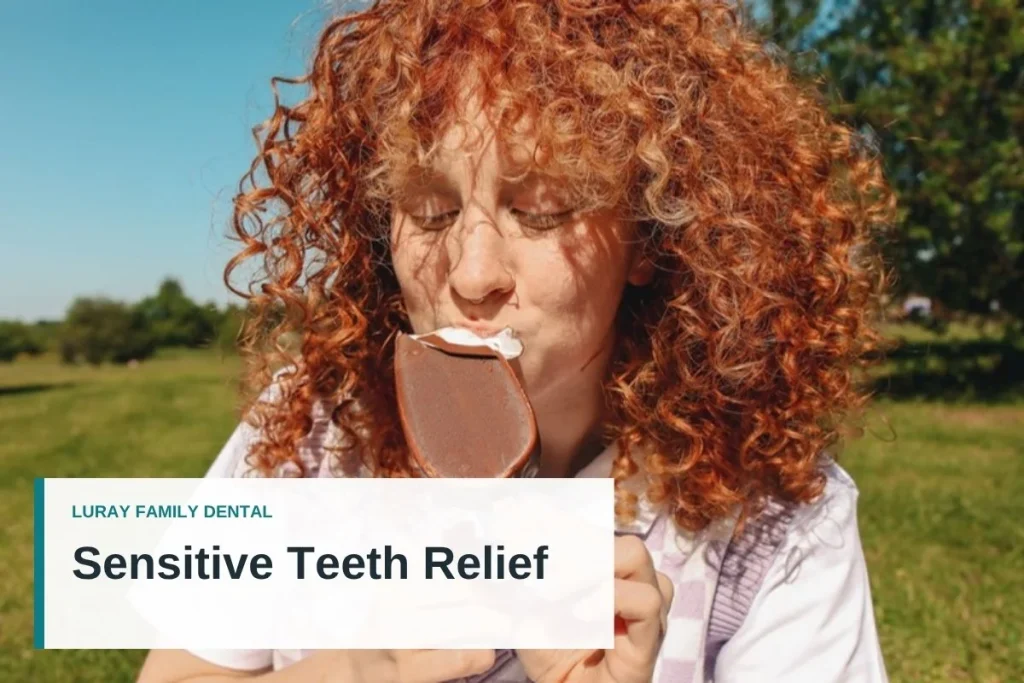
Sensitive Teeth: 8 Common Causes and How to Get Relief Fast
Quick answer: Sensitive teeth usually happen when the inner layer of the tooth (dentin) becomes exposed through worn enamel or receding gums. Hot, cold, sweet, or acidic foods then reach tiny nerve channels and cause a sharp, quick pain. Common causes include hard brushing, gum recession, grinding, cavities, and cracked teeth. Desensitizing toothpaste often helps within a few weeks, but see a dentist if sensitivity lasts or is getting worse.
That sharp zing when you sip ice water or bite into ice cream is hard to ignore. Tooth sensitivity is one of the most common dental complaints, and the good news is that it’s usually very treatable.
This guide from Luray Family Dental explains what causes sensitive teeth, what you can try at home, and how we can help.
Why Do Teeth Become Sensitive?
Under your enamel is a layer called dentin, which has thousands of tiny tubes leading to the nerve. When enamel wears down or gums recede, those tubes are exposed. Hot, cold, sweet, or sour foods can then trigger the nerve. The American Dental Association explains that sensitivity can also signal problems like cavities or cracked teeth.
8 Common Causes of Sensitive Teeth
- Brushing too hard or using a hard-bristled toothbrush
- Gum recession, which exposes the root surface
- Gum disease (see our gum disease treatment guide)
- Teeth grinding, which wears enamel (see night guards for teeth grinding)
- Cavities or worn, leaking fillings
- A cracked or chipped tooth (see our cracked tooth guide)
- Acidic foods and drinks, like soda, citrus, and sports drinks
- Recent dental work or teeth whitening (usually temporary)
Sensitivity vs Something More Serious
| Normal sensitivity | May need prompt care | |
|---|---|---|
| Pain length | A few seconds, then gone | Lingers 30 seconds or longer |
| Trigger | Cold, sweet, or brushing | Biting, or pain with no trigger |
| Location | Several teeth | One specific tooth |
| Other signs | None | Swelling, throbbing, fever, a bump on the gum |
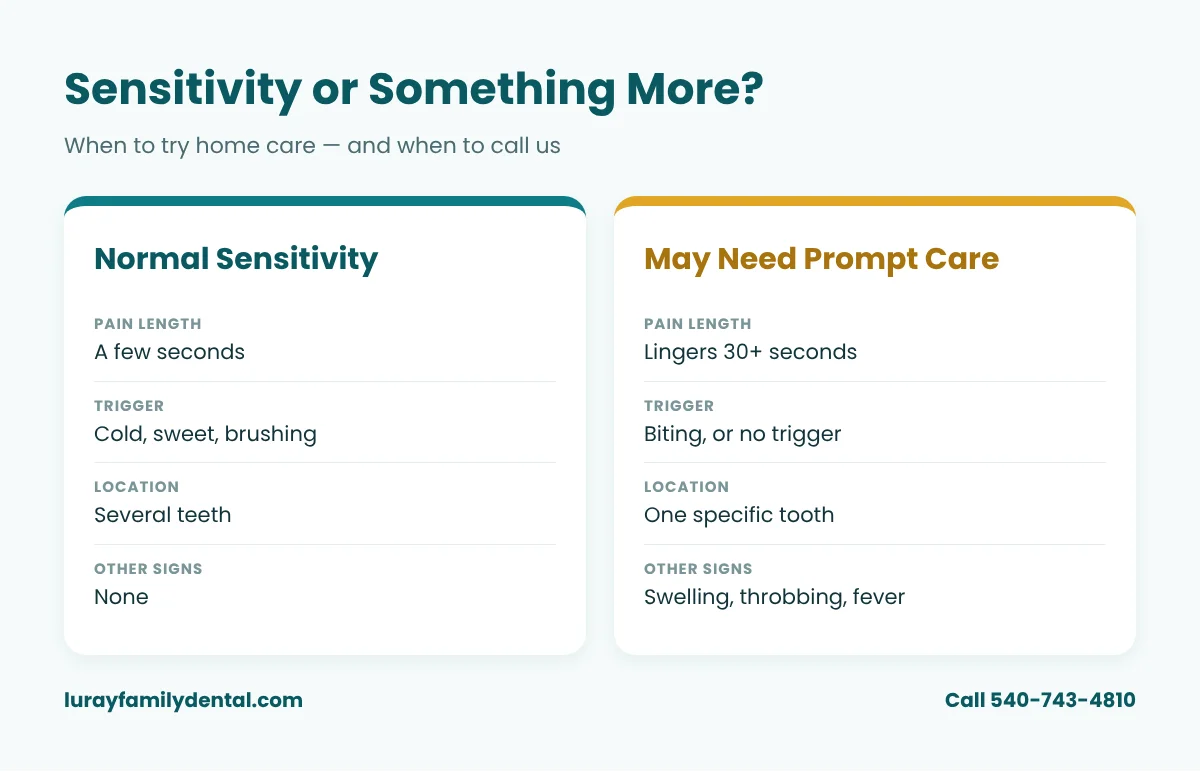
If your symptoms match the right column, call us. Lingering pain can mean the nerve is inflamed and may need root canal therapy.
At-Home Relief for Sensitive Teeth
- Use a desensitizing toothpaste twice a day. It can take 2–4 weeks to work fully.
- Switch to a soft-bristled toothbrush and use gentle, circular strokes.
- Avoid acidic foods and drinks, or rinse with water after having them.
- Wait 30 minutes after acidic foods before brushing.
- Use fluoride toothpaste or rinse to strengthen enamel.
- Don’t clench or grind, and ask about a night guard if you do.
In-Office Treatments for Sensitive Teeth
If home care isn’t enough, we can help with:
- Fluoride varnish to strengthen enamel and reduce sensitivity
- Desensitizing agents painted on exposed root surfaces
- Bonding to cover exposed root areas (see dental bonding)
- Composite fillings to repair cavities or worn areas (see composite fillings)
- Crowns for cracked or badly worn teeth
- Gum treatment when gum disease or recession is the cause
Sensitive Teeth After Whitening or Dental Work
It’s common to have some sensitivity for a few days after a filling, a deep cleaning, or teeth whitening. It usually fades on its own. If it lasts more than two weeks, let us know.
How to Prevent Tooth Sensitivity
- Brush gently twice a day with a soft brush and fluoride toothpaste
- Floss daily to protect your gums
- Limit soda, energy drinks, and citrus
- Wear a night guard if you grind
- Get regular cleanings and checkups so small problems are caught early
Relief for Sensitive Teeth in Luray, VA
At Luray Family Dental, Dr. Ibrahim ElGarawany and our team find the real cause of your sensitivity before recommending treatment. We serve families from Luray, Stanley, Shenandoah, and across Page County, and our team includes Spanish-speaking staff.
4 Myths About Sensitive Teeth
- “Sensitivity is just part of getting older.” It’s more common with age, but it’s usually treatable.
- “Whitening ruins teeth forever.” Sensitivity after whitening is usually temporary and fades within days.
- “Brushing harder keeps teeth cleaner.” Hard brushing wears enamel and pushes gums back, making sensitivity worse.
- “If it’s sensitive, there’s nothing a dentist can do.” There are many effective treatments, from fluoride varnish to bonding.
Foods and Drinks That Can Trigger Sensitivity
- Ice water and frozen treats
- Hot coffee and tea
- Citrus fruits and juices
- Soda, energy drinks, and sports drinks
- Sticky candy and sugary snacks
- Pickled foods and vinegar-based dressings
Try drinking cold or acidic drinks through a straw and rinsing with water afterward.
Frequently Asked Questions
Why are my teeth suddenly sensitive?
Sudden sensitivity can come from a new cavity, a cracked tooth, gum recession, recent whitening, or grinding. If it doesn’t improve in a week or two, see your dentist.
Can sensitive teeth go away on their own?
Mild sensitivity from whitening or dental work often goes away within days. Sensitivity from worn enamel, gum recession, or cavities usually needs treatment.
Does desensitizing toothpaste really work?
Yes, for many people. It works by blocking the tiny tubes in the dentin or calming the nerve. Use it twice daily for at least 2–4 weeks.
Is tooth sensitivity a sign of a cavity?
It can be. Sensitivity in one tooth, especially to sweets, may mean a cavity. A dental exam can tell for sure.
Where can I get help for sensitive teeth in Luray, VA?
Luray Family Dental at 156 E. Main St., Luray, VA 22835 diagnoses and treats tooth sensitivity. Call 540-743-4810.
Tired of wincing at cold drinks? Let us find the cause. Call 540-743-4810 or request an appointment online.