
Deep Cleaning vs Regular Cleaning: 5 Key Differences Explained by a Luray Dentist
Quick answer: The main difference between a deep cleaning vs regular cleaning is where the cleaning happens. A regular cleaning removes plaque and tartar above the gumline and is for healthy gums. A deep cleaning (scaling and root planing) removes bacteria and tartar below the gumline and is used to treat gum disease. A deep cleaning usually needs numbing and is often done in two visits.
You came in for a routine cleaning, and your dentist said you need a “deep cleaning.” Is that really necessary? It’s one of the most common questions we hear at Luray Family Dental, and it deserves a clear answer.
This guide compares deep cleaning vs regular cleaning side by side, so you can understand why your dentist might recommend one over the other and what to expect at each visit.
What Is a Regular Dental Cleaning?
A regular cleaning (also called a prophylaxis) is the preventive cleaning most people get every six months. It is for patients with healthy gums or mild gingivitis.
During a regular dental cleaning, your hygienist:
- Removes plaque and tartar from tooth surfaces and just at the gumline
- Polishes your teeth to remove surface stains
- Flosses between teeth
- Checks your gums and screens for cavities and other problems
It usually takes 30–60 minutes and doesn’t require numbing. Want to know the full benefits? Read why regular dental cleanings matter. That is the heart of deep cleaning vs regular cleaning: one prevents problems, the other treats them.
What Is a Deep Cleaning?
A deep cleaning, called scaling and root planing, is a treatment for gum disease. The American Dental Association explains it as a deep cleaning below the gumline used to treat gum disease without surgery. This is the biggest difference in deep cleaning vs regular cleaning: a regular cleaning stays above the gumline, while a deep cleaning goes below it.
It has two parts:
- Scaling: Removing plaque and tartar from below the gumline, all the way down to the bottom of each gum pocket.
- Root planing: Smoothing the tooth roots so bacteria have a harder time sticking, and so gums can heal and reattach.
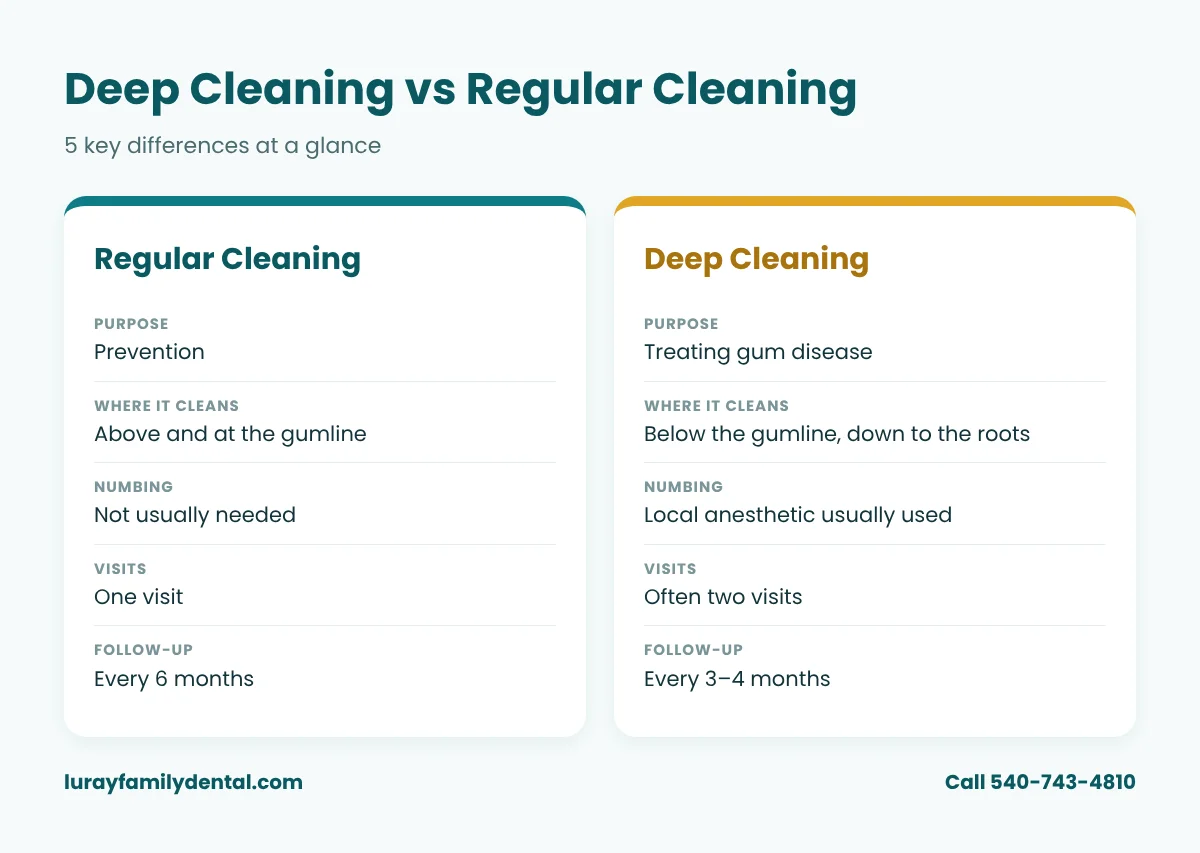
Deep Cleaning vs Regular Cleaning: 5 Key Differences
| Regular cleaning | Deep cleaning | |
|---|---|---|
| 1. Purpose | Prevention | Treating gum disease |
| 2. Where it cleans | Above and at the gumline | Below the gumline, down to the roots |
| 3. Numbing | Not usually needed | Local anesthetic is usually used |
| 4. Number of visits | One visit | Often two visits (half the mouth each time) |
| 5. Follow-up | Every 6 months | Periodontal maintenance every 3–4 months |
Signs You Need a Deep Cleaning
Your dentist measures the pockets between your teeth and gums with a small, gentle tool. Healthy pockets are 1–3 mm. Pockets of 4 mm or more, plus bleeding, usually mean bacteria have moved below the gumline.
Other signs you may need a deep cleaning:
- Gums that bleed easily when you brush or floss
- Gums that are red, swollen, or pulling away from teeth
- Bad breath that doesn’t go away
- Bone loss showing on panoramic X-rays
- Loose teeth
These are also classic signs of gum disease. Our full guide to gum disease treatment in Luray, VA covers them in more detail. If you are unsure where you fall on deep cleaning vs regular cleaning, a quick gum exam gives a clear answer.
What About Full-Mouth Debridement?
If it has been several years since your last cleaning, tartar may cover so much of your teeth that the dentist can’t do a complete exam. In that case, we start with a full-mouth debridement, which removes heavy buildup first. After that, we can see whether you need a regular cleaning or a deep cleaning.
Does a Deep Cleaning Hurt?
We numb the area before a deep cleaning, so most patients feel pressure and vibration, not pain. If you get nervous at the dentist, nitrous oxide can help you relax. You can also read our 9 proven ways to manage dental anxiety.
Recovery Tips After a Deep Cleaning
- Your gums may feel sore or sensitive for 2–3 days
- Rinse with warm salt water a few times a day
- Use a soft toothbrush and a sensitivity toothpaste
- Avoid very hot, spicy, or crunchy foods for a day or two
- Take over-the-counter pain relievers if needed
What Happens After a Deep Cleaning?
Gum disease can come back if bacteria rebuild in deeper pockets. That’s why we recommend periodontal maintenance visits every 3–4 months instead of the standard six-month cleaning. For some pockets that don’t fully heal, laser gum treatment may be an option.
Is a Deep Cleaning Worth the Cost?
Yes, in most cases. Skipping a needed deep cleaning lets gum disease continue to damage bone, which can lead to tooth loss and more expensive care such as dental implants. Many insurance plans cover part of scaling and root planing, and we offer flexible payment plans. Learn more on our financial options page. When you weigh deep cleaning vs regular cleaning costs, remember that treating gum disease early costs far less than replacing lost teeth.
What Happens If You Skip a Deep Cleaning?
It’s tempting to put off a deep cleaning, especially if nothing hurts. But a regular cleaning can’t reach the bacteria hiding deep under your gums. Over time, that infection can:
- Make gum pockets deeper and harder to clean
- Break down the bone that supports your teeth
- Cause gums to recede, exposing sensitive roots
- Lead to loose teeth and, eventually, tooth loss
- Cause ongoing bad breath and a bad taste in your mouth
The earlier gum disease is treated, the simpler and less expensive treatment is.
Myths About Deep Cleanings
- “Deep cleanings damage your teeth.” No. Scaling and root planing removes tartar and bacteria, not healthy tooth structure. It helps protect your teeth.
- “Deep cleanings make teeth loose.” Teeth may feel slightly different after swelling goes down, but the cleaning itself doesn’t loosen teeth. Gum disease does.
- “A regular cleaning is the same thing.” A regular cleaning only cleans above and at the gumline. It can’t treat infection in deeper pockets.
- “I’ll need deep cleanings forever.” Most people need one deep cleaning, then regular periodontal maintenance to keep gums healthy.
How to Keep Your Gums Healthy After Treatment
- Brush twice a day for two full minutes, angling the brush toward the gumline
- Floss or use small interdental brushes every day
- Consider an electric toothbrush or a water flosser
- Avoid smoking and vaping, which slow gum healing
- Keep every periodontal maintenance visit on your calendar
Why Luray Families Trust Our Hygiene Team
At Luray Family Dental, Dr. Ibrahim ElGarawany and our hygiene team take time to explain your gum measurements and show you photos from our intraoral camera, so you understand exactly why a treatment is recommended. We serve patients from Luray, Stanley, Shenandoah, and across Page County, and our team includes Spanish-speaking staff. See our guide to choosing a family dentist in Page County.
Frequently Asked Questions
How long does a deep cleaning take?
A deep cleaning usually takes one to two hours per visit. Most patients have half of the mouth treated at each of two visits.
How often do you need a deep cleaning?
Most people need a deep cleaning only once to bring gum disease under control. After that, periodontal maintenance cleanings every 3–4 months help keep it from coming back.
Can I go back to work after a deep cleaning?
Yes. Most patients return to work or school the same day. Your mouth may feel numb for a few hours, so wait to eat until the numbness wears off.
Why does my dentist say I need a deep cleaning when I didn’t before?
Gum disease often develops slowly and without pain. If your pocket measurements increased or your gums started bleeding, a deep cleaning may now be needed even if your past cleanings were regular ones.
Where can I get a deep cleaning in Luray, VA?
Luray Family Dental at 156 E. Main St. in Luray offers regular cleanings, deep cleanings, and periodontal maintenance for patients across Page County. Call 540-743-4810.
Not sure which cleaning you need? Let us take a look. Call 540-743-4810 or request an appointment. New patient? Visit our first dental visit guide.