
Gum Disease Treatment in Luray, VA: 7 Warning Signs & How Laser Therapy Helps
Quick answer: Gum disease treatment in Luray, VA starts with an exam that measures your gum pockets. Early gum disease (gingivitis) is often reversed with a professional cleaning and better home care. Advanced gum disease (periodontitis) is treated with a deep cleaning, laser gum treatment to remove infected tissue, and periodontal maintenance visits every 3–4 months. At Luray Family Dental, call 540-743-4810 to book a gum health check.
Bleeding when you brush is not “normal,” even if it happens all the time. It is usually the first sign of gum disease, and it is one of the most common problems we see at Luray Family Dental. The good news: when gum disease is caught early, it is very treatable.
This guide explains how gum disease treatment in Luray, VA works, the warning signs to watch for, and what modern laser gum treatment can do to protect your teeth.
What Is Gum Disease?
Gum disease (periodontal disease) is an infection of the tissues that hold your teeth in place. It starts when plaque, a sticky film of bacteria, builds up along and under the gumline. If plaque is not removed, it hardens into tartar, which only a dental professional can remove.
According to the American Dental Association, gum disease is a leading cause of tooth loss in adults. CDC research has found that close to half of American adults age 30 and older have some form of periodontitis.
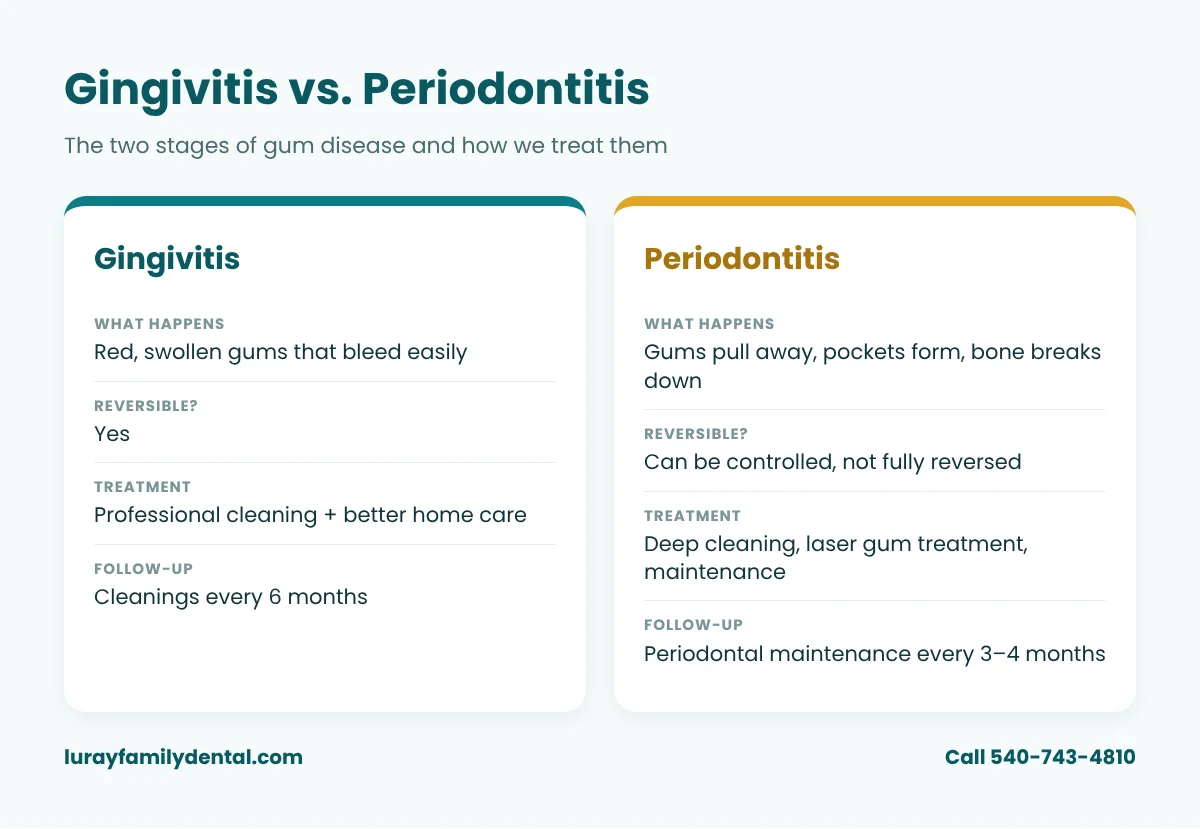
The Two Stages of Gum Disease
| Stage | What’s happening | Can it be reversed? | Typical treatment |
|---|---|---|---|
| Gingivitis | Gums are red, swollen, and bleed easily. No bone loss yet. | Yes | Professional cleaning + better brushing and flossing |
| Periodontitis | Gums pull away from teeth, pockets form, bone starts to break down. | It can be controlled, not fully reversed | Deep cleaning, laser gum treatment, periodontal maintenance |
7 Warning Signs You May Need Gum Disease Treatment
Gum disease is often painless in the early stages, which is why many people don’t notice it. Call us if you notice any of these signs:
- Gums that bleed when you brush or floss
- Red, puffy, or tender gums
- Bad breath or a bad taste that won’t go away (see our guide to bad breath that won’t go away)
- Gums that are pulling back, making teeth look longer
- Loose teeth or a change in how your teeth fit together
- Pus between your teeth and gums
- New gaps or spaces between teeth
If you have diabetes, smoke, are pregnant, or have a family history of gum disease, your risk is higher, so regular checkups are even more important.
How Gum Disease Treatment Works in Luray, VA
Every treatment plan starts with a careful exam. Our team measures the depth of the small pocket between each tooth and your gums. Healthy pockets are usually 1–3 mm deep. Deeper pockets mean bacteria have moved below the gumline.
We may also take panoramic X-rays to check the bone around your teeth, and use an intraoral camera so you can see exactly what we see.
Step 1: Professional or Deep Cleaning
For gingivitis, a thorough dental cleaning is often enough. For periodontitis, we recommend a deep cleaning (scaling and root planing), which removes tartar from below the gumline and smooths the tooth roots so gums can reattach. Not sure which one you need? Read our guide on deep cleaning vs. regular cleaning.
If heavy tartar is covering your teeth, we may first do a full-mouth debridement so we can get an accurate exam.
Step 2: Laser Gum Treatment
Laser gum treatment uses focused light energy to kill bacteria and remove infected tissue inside the gum pocket. This helps healthy tissue grow back.
Benefits of laser gum therapy include:
- Less bleeding than traditional gum surgery
- Fewer or no stitches in many cases
- A faster, more comfortable visit
- Quicker healing for most patients
Step 3: Periodontal Maintenance
Once gum disease is under control, the goal is to keep it that way. Periodontal maintenance visits are special cleanings, usually every 3–4 months, that keep bacteria from rebuilding in deeper pockets.
Does Gum Disease Treatment Hurt?
Most patients feel very little. We numb the area before a deep cleaning or laser treatment. If you feel nervous, ask us about nitrous oxide (laughing gas) or read our tips for managing dental anxiety.
After treatment, your gums may feel a little tender for a day or two. Over-the-counter pain relievers and warm salt-water rinses usually help.
Why Treating Gum Disease Early Saves Money
Untreated gum disease can lead to bone loss and loose teeth. Replacing lost teeth with dental implants or dentures costs far more than early treatment. Our team accepts many insurance plans and offers CareCredit and Cherry payment plans. See our guide to an affordable dentist in Luray, VA for details.
How to Prevent Gum Disease at Home
- Brush twice a day for two minutes with a soft brush and fluoride toothpaste
- Floss or use interdental brushes once a day
- Don’t smoke or use tobacco
- Keep blood sugar under control if you have diabetes
- Visit the dentist for cleanings and exams (see how often you should visit the dentist)
Gum Disease and Your Overall Health
Your gums don’t just affect your smile. Research has linked gum disease to other health problems, including heart disease, diabetes, and problems during pregnancy. The connection isn’t fully understood yet, but inflammation in the mouth appears to affect inflammation in the rest of the body.
Gum disease and diabetes are especially closely connected. High blood sugar makes it harder to fight gum infections, and gum infections can make blood sugar harder to control. If you have diabetes, let us know, and plan on more frequent gum checkups.
5 Common Myths About Gum Disease
- “Bleeding gums mean I’m brushing too hard.” Brushing too hard can irritate gums, but bleeding is much more often a sign of plaque buildup and inflammation.
- “If it doesn’t hurt, it’s not serious.” Gum disease is usually painless until it’s advanced. Pain-free does not mean problem-free.
- “Only older adults get gum disease.” Teens and young adults can develop gingivitis too, especially with braces, hormonal changes, or poor flossing habits.
- “I should stop flossing if my gums bleed.” The opposite is true. Gentle daily flossing usually reduces bleeding within one to two weeks.
- “Gum disease treatment always means surgery.” Most cases are treated without surgery using deep cleaning and laser gum therapy.
Why Page County Patients Choose Luray Family Dental
Our team, led by Dr. Ibrahim ElGarawany, cares for families from Luray, Stanley, Shenandoah, and nearby communities. We focus on gentle care, clear explanations, and treatment plans that fit your life. Modern tools like digital X-rays, intraoral cameras, and dental lasers help us find gum problems early and treat them comfortably. Our team also includes Spanish-speaking staff. Learn more in our guide to choosing a family dentist in Page County.
Frequently Asked Questions
Can gum disease be cured?
Gingivitis, the early stage, can be reversed with a professional cleaning and good home care. Periodontitis can’t be fully cured, but it can be controlled with deep cleaning, laser gum treatment, and regular periodontal maintenance.
How long does laser gum treatment take?
Most laser gum treatment visits take about one to two hours, depending on how many areas need care. Many patients return to normal activities the same or next day.
Is laser gum treatment covered by insurance?
Many dental insurance plans cover part of periodontal treatment. Our front desk team will check your benefits and explain your out-of-pocket cost before treatment starts.
Can gum disease cause tooth loss?
Yes. Advanced gum disease destroys the bone and tissue that hold teeth in place, which can make teeth loose and eventually fall out. Early treatment is the best way to protect your teeth.
Where can I get gum disease treatment near Luray, VA?
Luray Family Dental at 156 E. Main St., Luray, VA 22835 treats gum disease for patients from Luray, Stanley, Shenandoah, and all of Page County. Call 540-743-4810 to schedule.
Bleeding gums? Don’t wait. Our gentle team can check your gum health and build a plan that fits your needs and budget. Call 540-743-4810 or request an appointment online.